


What Is Cold Rolled Stainless Steel Coil
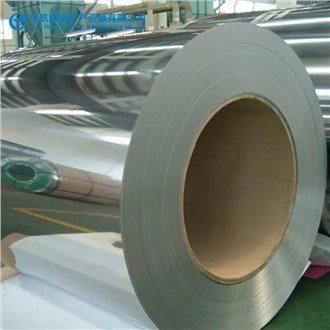
Cold Rolled Stainless Steel Coil is a type of stainless steel coil that has undergone a cold rolling process. In this process, stainless steel sheets are passed through rollers at room temperature to reduce the thickness and improve the surface finish of the material. Cold rolling helps to achieve tighter tolerances, smoother surfaces, and improved mechanical properties compared to hot rolled stainless steel coils. Cold Rolled Stainless Steel Coils are commonly used in various industries for applications that require high-quality stainless steel with precise dimensions and surface characteristics.
Advantages of Cold Rolled Stainless Steel Coil
Improved mechanical properties
Cold rolling enhances the mechanical properties of stainless steel, including tensile strength, hardness, and yield strength. The controlled deformation at lower temperatures refines the metal’s microstructure, contributing to its overall strength and toughness.
Superior surface finish
One of the standout features of cold-rolled stainless steel is its exceptional surface finish. The process eliminates imperfections and irregularities present in the initial stages, resulting in a smooth and polished surface. This makes cold-rolled stainless steel highly desirable for applications where aesthetics matter, such as architectural and decorative uses.
Tighter tolerances
Precision is paramount in many industries, and cold rolling delivers with tighter tolerances. The controlled reduction in thickness ensures uniformity, making cold-rolled stainless steel sheets or coils suitable for applications where precise dimensions are critical.
Increased work hardening
Cold rolling induces work hardening in stainless steel, contributing to its durability and resistance to deformation. This property is particularly valuable in applications where the material is subjected to repeated stress or forming processes.
Cost-efficiency
While the initial investment in cold rolling equipment may be higher, the long-term benefits often outweigh the costs. The improved properties and surface finish of cold-rolled stainless steel can result in cost savings during subsequent manufacturing processes and in the final product’s performance.


Why Choose Us
Firm
The company began to engage in stainless steel business in 1998 and has now become one of the leading enterprises in china's steel industry. The plant is 20,000 square meters +
Experienced
Committed to strict quality control and attentive customer service, our experienced staff is always ready to discuss your requirements and ensure complete customer satisfaction.
24 hours online
If you have difficulties using the product, we will respond to your needs as soon as possible and give you the greatest support
Production market
Our main markets: South Korea, Vietnam, Chile, Brazil, Italy, Indonesia, Turkey, Russia, etc. , so our customers are all over the world.
Cold Rolled Stainless Steel Coil:Cold Working Methods for Manufacturing



Deep draw
When deep drawing metal, a rolled coil is punched through a hole or die. The punch is used to achieve the desired shape. The die cavity matches the punch but is slightly wider which allows for passage and clearance. The raw material is forced into the die via the compression force. Each draw operation is a separate step, and with each step there is a reduction in diameter, increasing the height or depth of the part. This is done to ensure that, as the metal changes shape, re-crystallization occurs as well. Products made by deep drawing include battery enclosures, implantable medical devices, aerospace and defense components for aircraft.
Cold extrusion
Extrusion is an important and versatile manufacturing process, though it is still a relatively new metalworking technique. Cold extrusion forces a slug of material through a die at either room temperature or slightly elevated temperature. This produces a product of constant cross-section. Many metals can be extruded, including tin, aluminum alloys, copper, lead, steel, and others.
Precision stamping
Metal stamping is another manufacturing process that is ideal for producing metal products where tight tolerances are required. In metal stamping, a flat metal strip coil is converted into a variety of shapes. This complex process includes a few different metal forming techniques, like punching, coining, piercing, blanking, and bending, among others.
Roll forming
Roll forming involves bending a long strip of metal (usually coiled steel) that is passed through sets of rolls, with each performing an incremental part of the bend. The finished product is bent until the desired cross-section profile is reached.
Cold Rolled Stainless Steel Coil: Stainless Steel Surface Treatment
No. 1 Finish
Hot rolled, annealed, and descaled. Suitable for industrial and engineering applications where aesthetics are not a primary concern but where robustness and durability are needed.
2B Finish
Smooth, reflective surface that is ideal for general applications where some aesthetic appeal is necessary, along with good corrosion resistance.
BA (Bright Annealed)
Highly reflective surface, achieved through a final annealing in a controlled atmosphere furnace. Often used for decorative applications, appliances, and reflectors for its excellent appearance and corrosion resistance.
No. 4 Finish
Fine polishing lines, has good corrosion resistance and is commonly used in kitchens, food processing equipment, and architectural panelling for its balance of aesthetics and practicality.

Carbon coil
Apart from carbon, carbon coil has small quantities of silicon, manganese, sulfur and phosphorus. It is good for second grade applications and comes in a variety of grades and thicknesses.
Galvanised coil
The process of making galvanised coil is by hot-dipping or electrolytic deposition of hot or cold rolled sheet in zinc. It helps resist corrosion and is used in the automotive industry or in roofing.
Hot rolled steel coil
Made from semi-finished products, these steel coils are rolled, annealed, and reduced to a certain thickness and rolled into coils. This type of steel coil is used in manufacturing pipes, steel doors and tanks and can be further processed into cold rolled steel. Hot-dip galvanised steel coils are also available with a pure zinc coating that offers economy, strength and formability. Hot-dip galvanised steel is used in building roofs, doors, windows, roller shutter doors and electric equipment.
Cold Rolled Stainless Steel Coils: Packaging

01
Wooden pallets
Stainless steel coils are often packed on wooden pallets that are designed to protect the coils during handling and transportation. The coils are typically placed on the pallets and secured using strapping or shrink wrap.

02
Steel strapping
Stainless steel coils may also be secured using steel strapping, which helps to prevent damage during transportation. The coils are typically wrapped in a layer of protective material, such as paper or plastic, before being strapped to a pallet or bundle.

03
Plastic or cardboard sleeves
Stainless steel coils may be wrapped in plastic or cardboard sleeves to provide additional protection against scratches, dents, and other types of damage.

04
Customized packaging
Depending on the customer's requirements, stainless steel coils may be packed and shipped in customized packaging, such as shrink-wrapped bundles, wooden crates, or steel drums.
Application of Cold Rolled Stainless Steel Coil
Cold rolled stainless steel coil is widely used in the automotive industry for various components such as exhaust systems, trim, decorative panels, and structural reinforcements. Its corrosion resistance and aesthetic appeal make it suitable for both exterior and interior applications in vehicles.
In the construction and architecture sectors, cold rolled stainless steel coil finds applications in structural components, roofing, cladding, facades, handrails, and decorative elements. Its durability, weather resistance, and design versatility make it a preferred choice for modern architectural designs.
Cold rolled stainless steel coil is extensively used in the production of kitchenware, cookware, appliances, and food processing equipment due to its hygienic properties, ease of cleaning, and resistance to corrosion, heat, and chemical exposure.
In industrial settings, cold rolled stainless steel coil is utilized for manufacturing equipment and machinery components such as tanks, pipes, valves, pumps, heat exchangers, and storage containers. Its high strength, corrosion resistance, and temperature resistance make it suitable for demanding industrial applications.
Cold rolled stainless steel coil is also employed in the electronics and consumer goods industries for manufacturing electronic enclosures, casings, appliances, furniture, hardware, and decorative items. Its aesthetic appeal, durability, and recyclability contribute to its popularity in consumer products.
201 stainless steel
201 stainless steel is a lower-cost alternative to theconventional cr-ni austenitic stainless steels, such as 304 .
202 stainless steel
202 stainless steel is similar to 201 stainless steel but with lower carbon and higher nickel content, which reduces its strength and ductility.
304 stainless steel
304 stainless steel is a low carbon, molybdenum bearing, austenitic stainless steel . Its chemistry features a minimum of 18% chromium and 8% nickel.
301 stainless steel
301 stainless steel is a type of hardenable austenitic stainless steel with high strength, moderate corrosion resistance and good formability. It is the most widely used of all the austenitic stainless steel and is widely used in many industries as its properties make it an excellent choice for various applications.
316l stainless steel
316l stainless steel is a low carbon, corrosion resistant grade. It has excellent weldability and its heat treatment properties are very similar to type 310s
321 stainless steel
321 stainless steel is a free-machining austenitic chromium-nickel austenitic alloy (18% cr, 12% ni) that provides good corrosion resistance in a wide range of corrosive environments.
Rust prevention
Take precautions when your project is new to avoid a potentially lengthy demolition process later. Rust on cold-rolled steel is a big problem; let’s look at some ways to prevent rust on steel surfaces.
Keep it dry
The most direct way to prevent rust is to keep the steel clean and limit its contact with water. If you have a project you will be maintaining indoors, make sure the environment is not too humid. Use a dehumidifier to store steel in humid environments, such as unfinished basements.
Avoid scratches
Steel scratches and pitting expose more of the surface to water and moisture. This exposure causes the steel to retain moisture for longer periods of time, increasing the likelihood of rust. If practical, keep sharp tools and heavy machinery away from completed steel projects.
Use a protective coating
It is recommended to use a commercial rust inhibitor to improve the moisture resistance of steel. These products come in a variety of forms, including wipes and aerosols. Chemicals used to prevent rust are ideal for smaller projects, such as outdoor equipment, tools, and gates.
Process of Cold Rolled Stainless Steel Coil
Stainless steel is a kind of high alloy steel, rolling deformation resistance is larger. In order to carry out high efficiency and high precision rolling, rigid rolling mill should be used, generally using multi-high cold rolling mill;
The special welding process is also a feature of cold rolled stainless steel coil production;
Cold rolled stainless steel coil production process, raw materials (hot rolled coil) to annealing, cold rolling process to intermediate annealing, the final product also annealing, so annealing is an important link in the production;
Cold rolled stainless steel is a kind of senior steel products, the surface quality requirements are very strict, not only does not allow residual metallurgical defects brought by the previous process, and does not allow obvious defects caused by cold rolling process;
Cold rolling stainless production is multi-unit joint operation, process balance and process management is very important, must have a strong production scheduling system, in order to ensure continuous quality production.
How to Choose a Cold Rolled Stainless Steel Coil
Grade selection
Choosing the appropriate grade of stainless steel is crucial for ensuring optimal performance and corrosion resistance in specific applications. Factors such as environmental conditions, temperature, exposure to chemicals, and mechanical stress should be considered when selecting the grade of cold rolled stainless steel coil.
Surface finish
The surface finish of cold rolled stainless steel coil affects its appearance, corrosion resistance, and cleanability. Depending on the application requirements, different surface finishes such as smooth, matte, textured, or patterned finishes may be chosen to achieve the desired aesthetic and functional properties.
Thickness and dimensional tolerance
The thickness and dimensional tolerance of cold rolled stainless steel coil play a critical role in its suitability for specific applications. Close adherence to dimensional specifications ensures compatibility with mating components and facilitates ease of installation and assembly.
Environmental impact
Stainless steel is a sustainable and environmentally friendly material with a high recycling rate and long service life. When selecting cold rolled stainless steel coil, consideration should be given to its environmental impact, recyclability, and potential for reducing carbon footprint throughout its lifecycle.
Choosing the Right Cold Rolled Stainless Steel Coil Supplier
Industry experience
We advise the audience to choose a supplier with a proven track record and extensive experience in providing stainless steel coils to specific industries. Experience often correlates with expertise and reliability.
Quality standards
It is crucial to verify that the selected supplier adheres to stringent quality control standards. Certifications such as iso 9001 indicate a commitment to delivering high-quality products that meet industry standards.
Customization options
Reputable suppliers are known for customizing stainless steel coils to meet unique requirements. This flexibility ensures that the coils seamlessly integrate into various applications.
Timely delivery
Reliability in terms of timely delivery is crucial for maintaining smooth operations in various industries. Choosing a supplier known for punctuality and efficient logistics is paramount.
AVIC International Mineral Resources Co., Ltd is a state-owned key Company held by AVIC Group (Aviation Industry Corporation of China, which is one of the World Top 500 Enterprise (number 144 in 2022). We are engaged in stainless steel business in 1998, and now we become one of the leading steel industry in China. our company is located in Hangzhou city which held the G20 Summit in 2016 year ,it is the capital of Zhejiang Province and famous for West Lake.
